
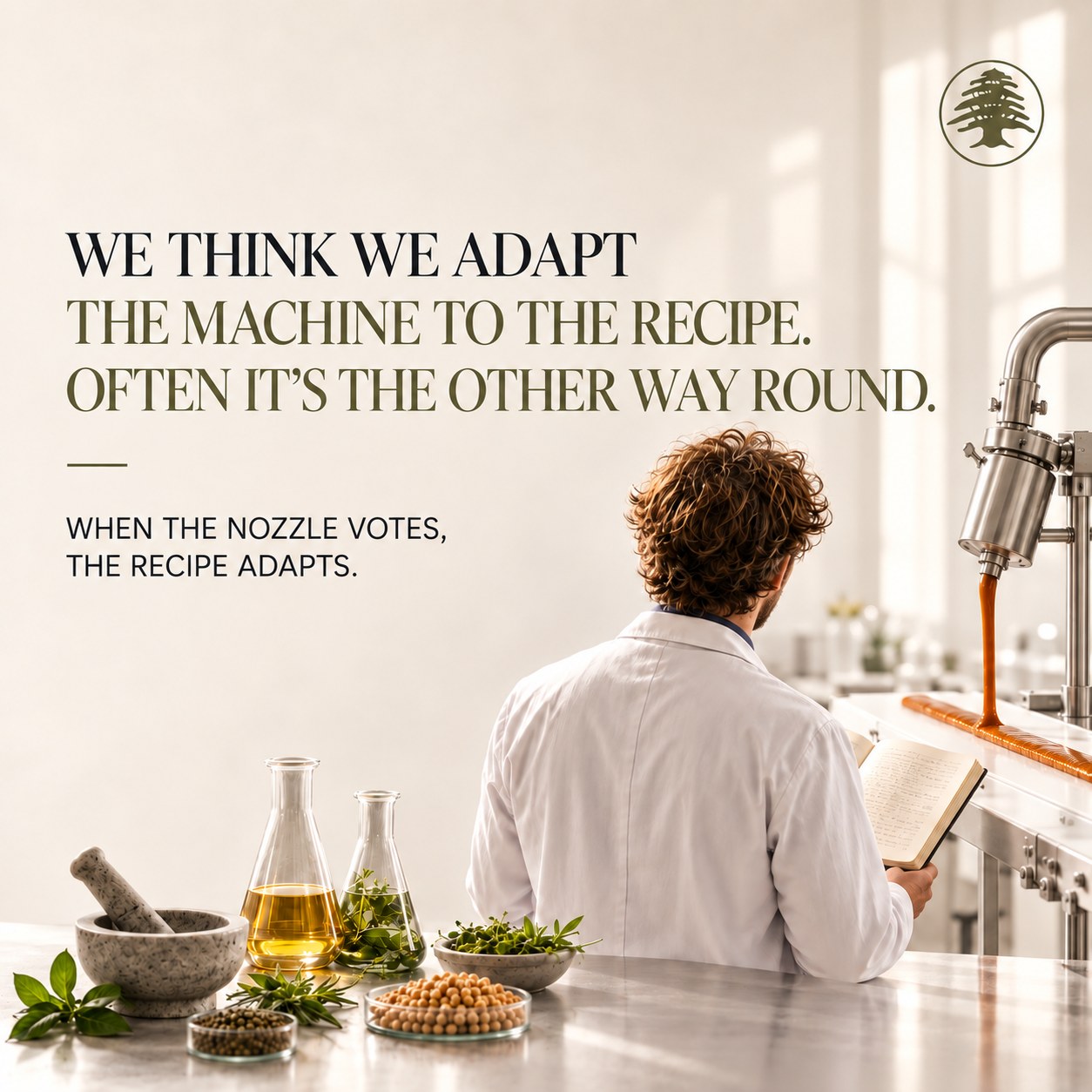
In the textbooks, the machine bends to the recipe. In a real factory, it’s the ingredient you reformulate so it can hold the throughput, the temperature, the viscosity, the dosing.
And that’s not a betrayal: it’s engineering. A product that clogs a nozzle, sets in the cold or sticks to the belt is worthless, however delicious on paper. The industrial constraint is part of the recipe, full stop.
But there’s a red line. The day you sacrifice taste to save three seconds of cycle time, you’ve lost everything — you’re making volume, not food. I’ve seen too many excellent recipes flattened by the production line.
The real craft isn’t choosing between the two. It’s designing the ingredient and the machine together, from the start.
Colleagues: how many of your recipes were drawn by the palate — and how many by the line?