
In an R&D lab, when someone says the word “protein,” nobody pictures a steak or a bicep. They picture a Swiss Army knife. It gels a custard, stabilises a foam, holds the water in a sausage, browns a crust. In short, we hired it for its technical skills… and rather forgot to read the rest of its résumé.
Let's start over, without the lab coat. A protein is a necklace. The beads are amino acids — about twenty models — threaded in a precise order. That order is the recipe. And like any sophisticated necklace, it doesn't stay straight: it folds in on itself into a very particular shape that decides everything it can do. As long as the shape holds, the protein works away quietly.
Denaturing, or the art of unfolding cleanly
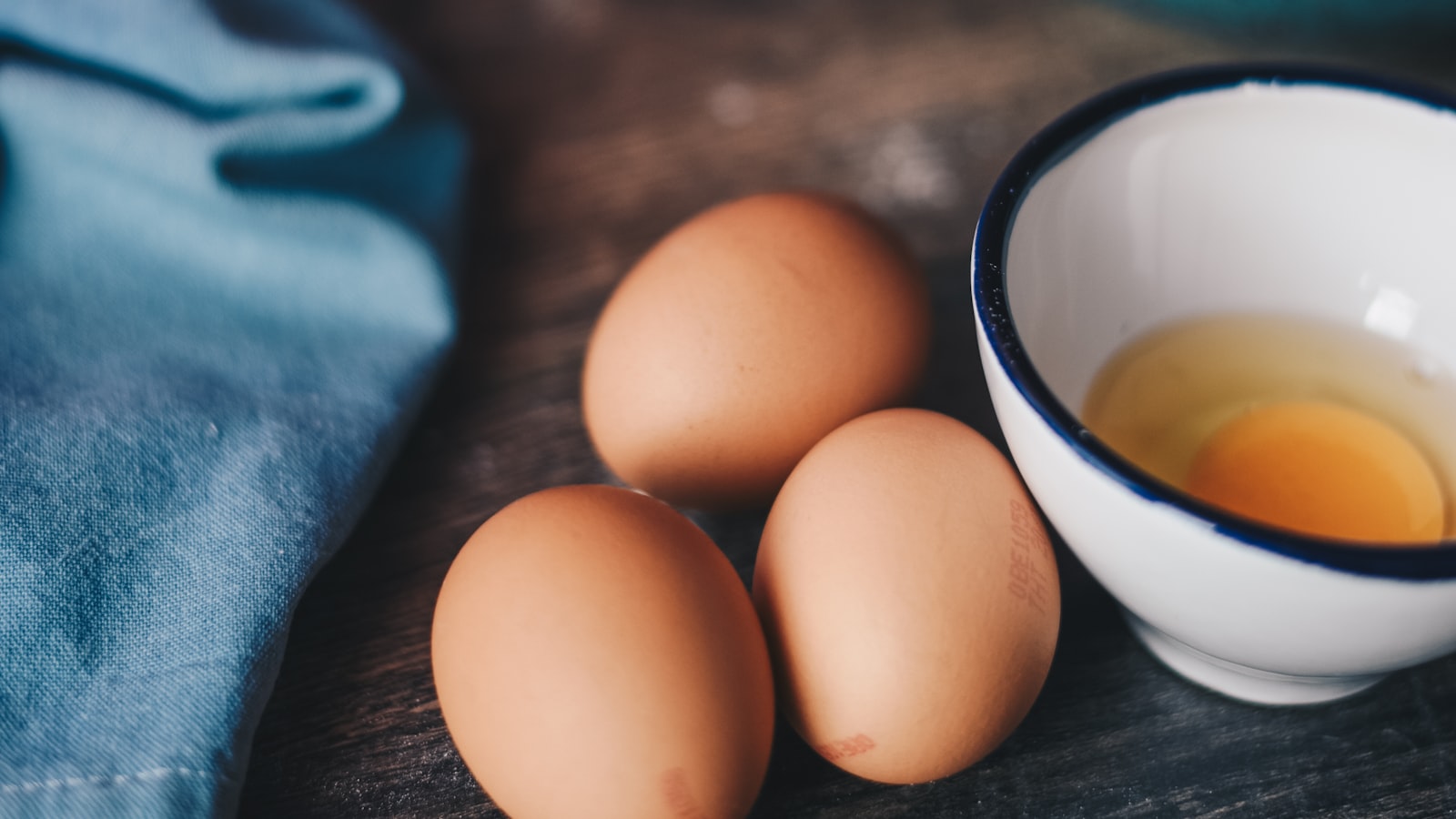
Now heat it. Or whisk it. Or acidify it. The shape comes undone — we say the protein is “denatured,” which sounds like a crime but is only an unfolding. The translucent egg white that turns firm and white? That's it: proteins unfolding, latching onto one another and trapping water. The chocolate mousse that holds? Unfolded proteins standing guard around the air bubbles. Nothing magic — just geometry that got hot.
Its five trades (that you already know)
Solubility, water retention, gelation, emulsion, foaming: those are the five lines of its technical résumé. The casein that holds a cheese together, the egg that binds a quiche, the soy that structures a substitute, the gluten that gives bread its stretch. And, icing on the crust, the Maillard reaction: a protein meeting a sugar under heat and manufacturing, together, the golden colour and the smell of bread coming out of the oven. Half of all eating pleasure rests in that handshake between a protein and a sugar.
The rest of the résumé, the part we forget
But reducing protein to its factory talents is like hiring a Michelin-starred chef to tighten bolts. Because it is also what nourishes us — the only one of the three great macronutrients the body can't really stockpile, and which therefore has to be resupplied every day. It's what satiates best. And it's the centre of the century's big story: animal or plant, fermented or cultivated, expensive or affordable.
So yes, protein gels, foams and browns. But the next time a spec sheet reduces it to “texturising agent,” remember we're talking about the molecule life itself is written with. It isn't a functional ingredient. It's an ingredient that agreed, out of politeness, to do a little background work as well.
Next episode → Carbohydrates: the fuel we love to hate.