
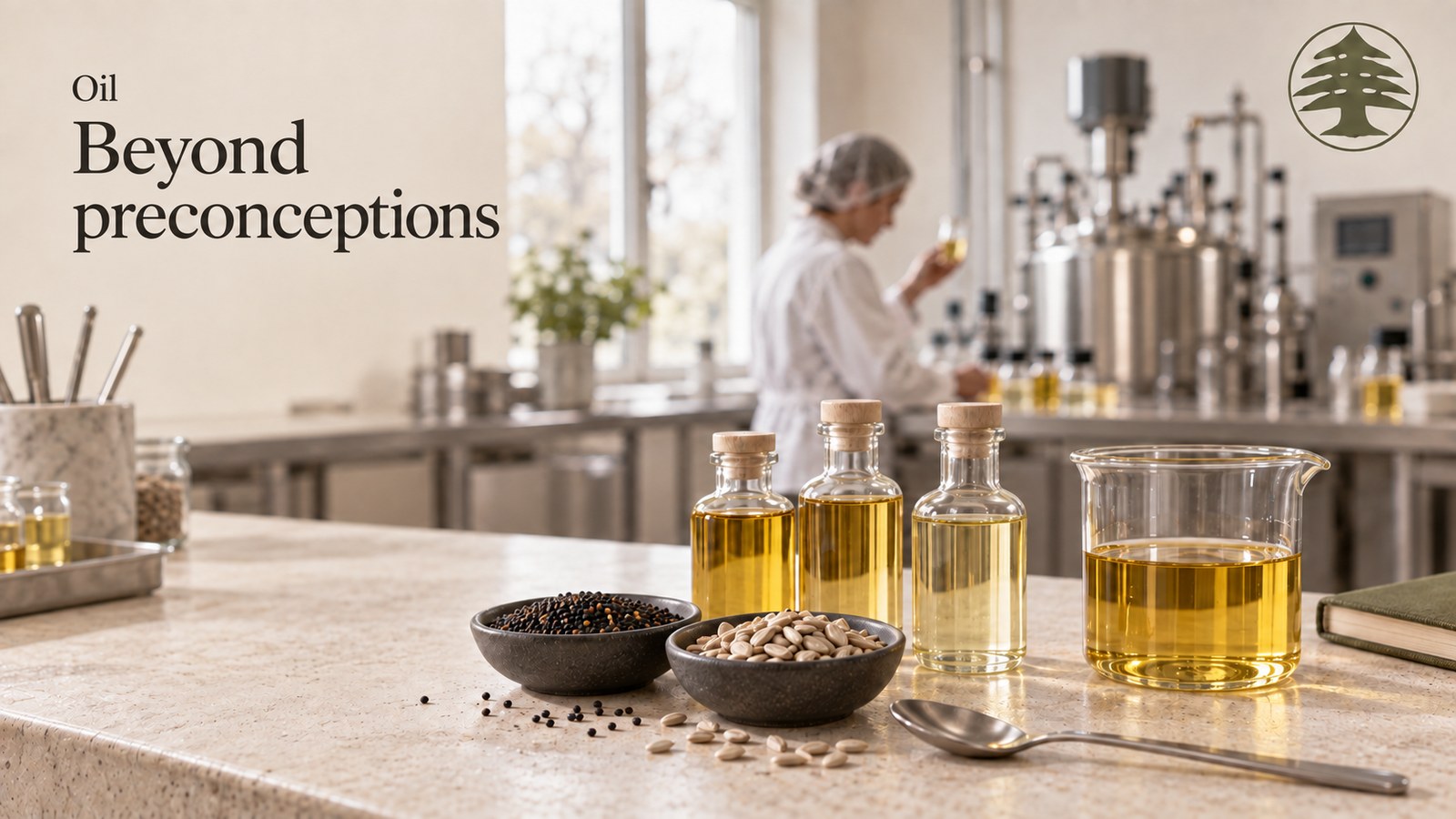
It's the invisible ingredient. We never order it, we barely taste it, and yet we swallow litres of it without a thought. From street-side frying in Bangkok to a Parisian vinaigrette, oil is everywhere — because it's the cheapest way in the world to make anything taste good. And behind that banality hides one of the most hypocritical debates on our plate.
Why everywhere? Because fat is a brilliant cheat. It carries aroma, it lubricates texture, it satiates, it browns and crisps. No other ingredient does so much work for so little money. Oil is the universal vector of pleasure — the shortcut every cuisine on earth found on its own.
Now the awkward question: what about palm oil? We love to hate it. But here's the discomfort: for the same area of land, the oil palm yields four to ten times more oil than rapeseed, sunflower or soy. Banning it often means replacing it with something worse — more hectares, more forest cleared elsewhere. The problem was never the plant; it was always the way we grow it.
Hence the real work. Alternatives exist — local oilseeds, precision oils from fermentation, valorised by-products — but none is a magic wand. The honest question isn't "which oil is holy and which is evil." It's: are we growing the one we need on the right land, or are we choosing our oils by reputation rather than by the numbers?
To my peers: do our oil choices still rest on science and land use — or on whichever one has the worst press this year?