
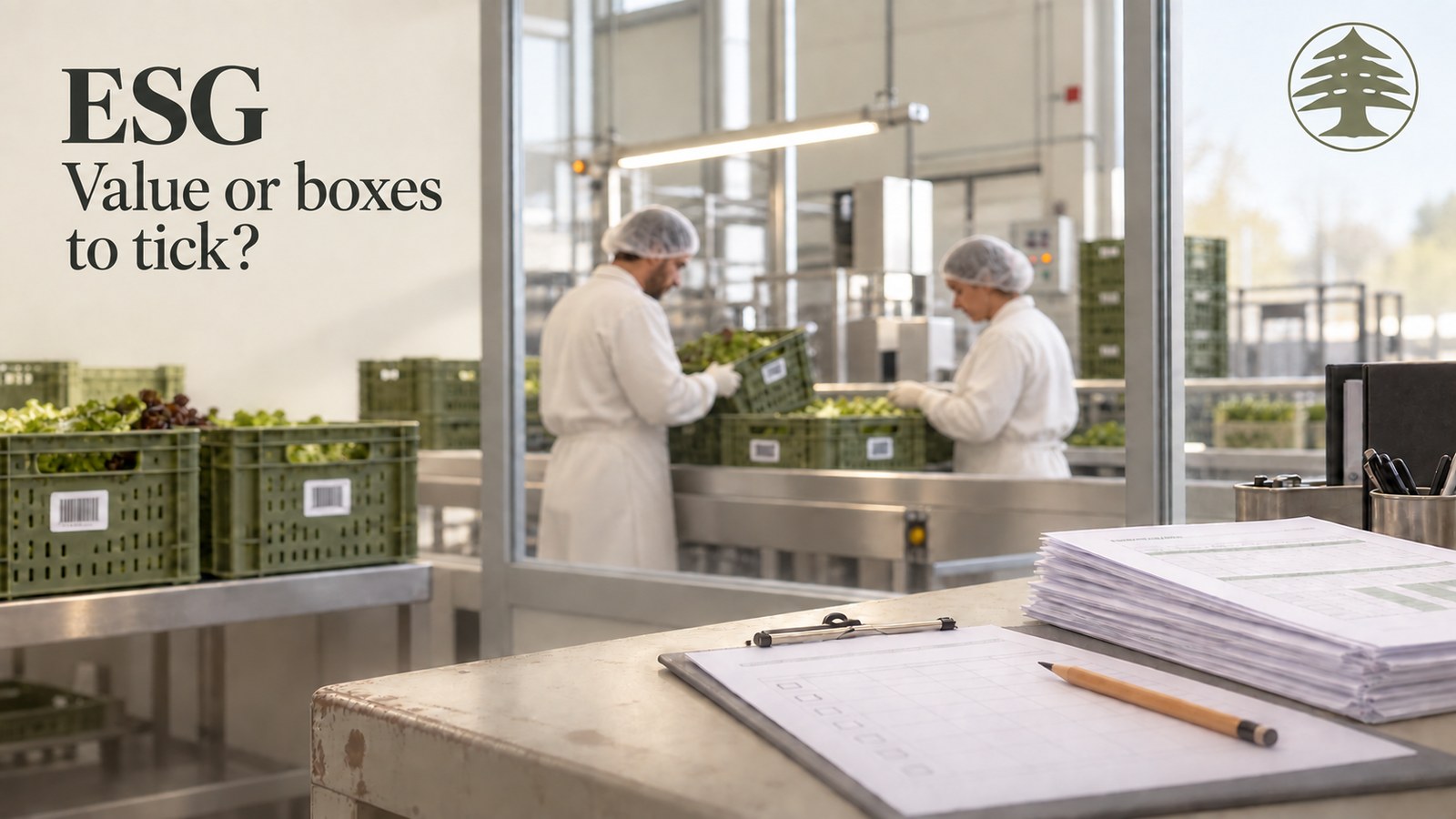
Three letters that, in a decade, went from the forgotten back page of the annual report to the new corporate religion — with its high priests (the auditors), its indulgences (carbon credits) and its inquisition (the LinkedIn name-and-shame). So let's ask the awkward question: in the food industry, is ESG a real need, real progress, or just a new cost line dressed up as virtue?
Let's start with the uncomfortable obvious: most of what ESG asks of us, our grandparents did for free. Don't waste. Treat your people decently. Don't poison the river next door. We invented an acronym to rediscover that waste is expensive and that contempt always sends the bill in the end.
Here's the rub: between the common-sense idea and its execution, a whole industry has slipped in. Consultancies, competing standards, spreadsheets with a hundred columns. Sometimes we measure more than we act. A mid-sized company can now spend more proving it's virtuous than actually becoming it.
Should we throw the baby out with the reporting? No. Because behind the jargon, the shift is real: a customer demanding traceability, an employee wanting meaning, an energy bill that suddenly makes efficiency profitable. ESG done well isn't a moral tax, it's management — the kind that spots the risk before it costs.
So the real divide isn't "for or against ESG." It's: are you creating value, or filling in boxes? The same three letters can be a strategic lever or a sterile cost centre. It all depends on who holds the pen.
To my peers running these programmes: has your ESG ever actually prevented a real risk or seized a real opportunity — or has it, so far, produced nothing but PDF?