
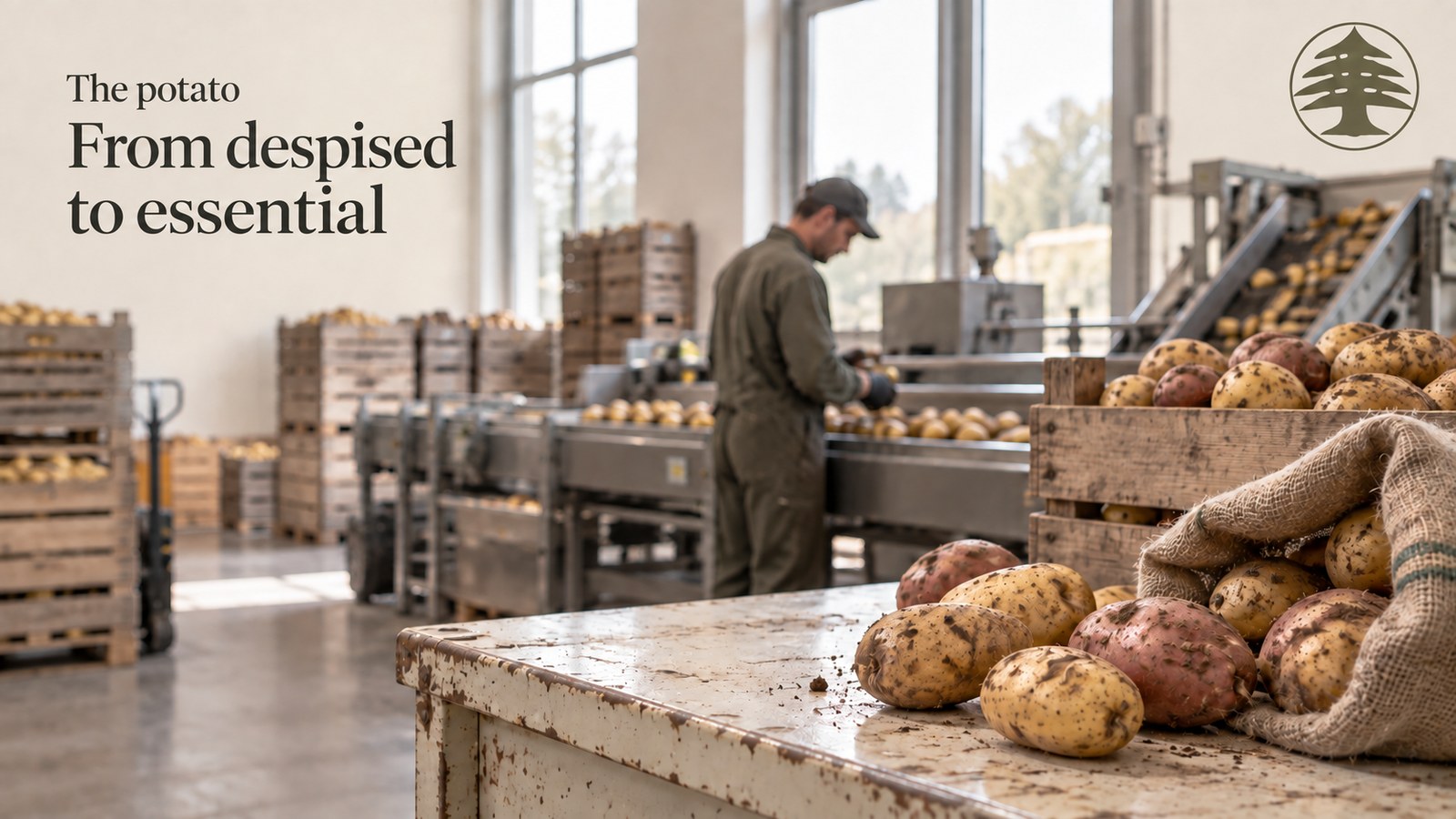
We took it for poison. We fed it to pigs. The Church was wary — it wasn't in the Bible and grew, suspiciously, underground. Two centuries later, this unloved tuber was feeding a continent and fuelling its industrial revolution. The story of the potato is one of contempt that nearly cost us dear — and of a rescue that left us dangerously dependent.
Let's recall the facts. Landed from the Andes in the sixteenth century, the potato took two hundred years to be accepted. It took cunning: Parmentier had his fields guarded by soldiers during the day — so that peasants, convinced there was treasure inside, would come and steal them at night. Marketing by scarcity, centuries early.
Then everything shifts. A hectare of potatoes feeds two to four times more mouths than a hectare of wheat. Europe's population explodes; hands pour into the cities and the factories. Without this starch, no modern demography — and probably no industrialisation this fast. The plant we refused built the Europe we know.
But the story carries a bitter moral. By betting everything on a single variety, Ireland discovered in 1845 what monoculture costs: one fungus, a million dead, two million exiled. The potato taught us two lessons at once — the power of an efficient food, and the danger of putting all your starch in one basket.
To my peers: what is, today, the "potato" we still despise — the unloved, misunderstood ingredient that will feed tomorrow's Europe?