
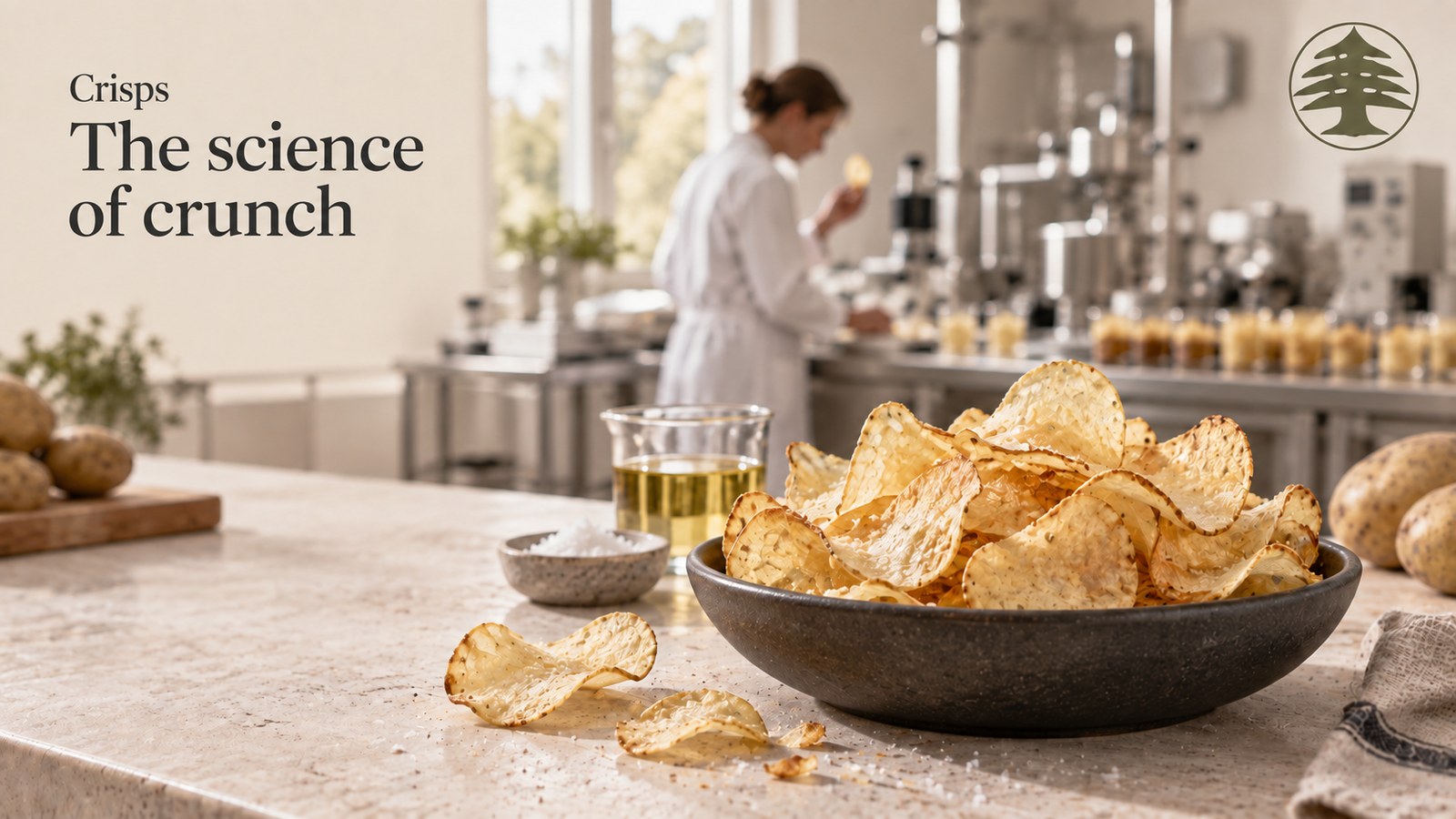
We call them empty calories, junk food, a guilty temptation. And yet no Michelin brigade has ever pulled off what a simple slice of potato manages in every bag: defeating your willpower, effortlessly, on demand. The crisp (the potato chip, for our readers across the Atlantic) isn't an industrial accident. It's a masterpiece of engineering disguised as junk.
A word of history, because the legend is too good. 1853, Saratoga: a diner sends back his fries, too thick. The cook, irritated, slices them furiously thin and over-salts them out of spite. The diner loves them. The tastiest revenge in culinary history had just been born.
But the real genius is in the science. The crisp unites the trio our brain can't refuse: fat, salt and crunch. That last one is underrated: the sound of the crunch is a freshness signal the brain rewards — we eat with our ears too. Add the "bliss point," that salt-fat dosage calculated so no bite ever tires you, and you get a near-perfect loop: each crisp sets up the next.
That's why contempt is a mistake. You can moralise about the crisp, or you can study it. Because it cracked a problem haute cuisine never did: reproducible, industrial irresistibility, at thirty cents. That's no small thing. It's even, if you look closely, a lesson.
To my peers: what if, instead of looking down on the crisp, we honestly asked why it wins — and what a "good" product could steal from it?